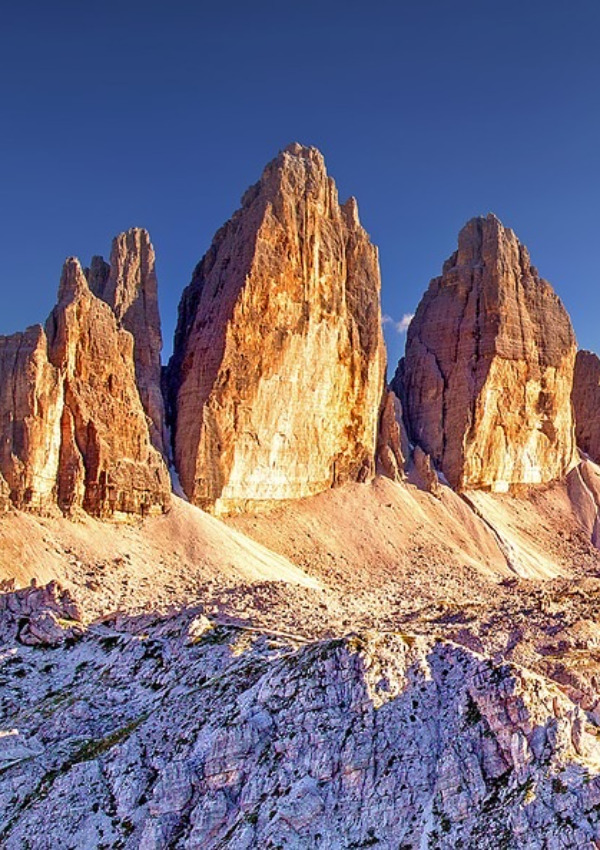

The Three Peaks, a geological monument

Host
Dolomiten erleben
Birchach 8
Details
Marine life forms the foundation of this striking mountain range in the Sesto Dolomites on the border between the Italian provinces of Belluno and South Tyrol.
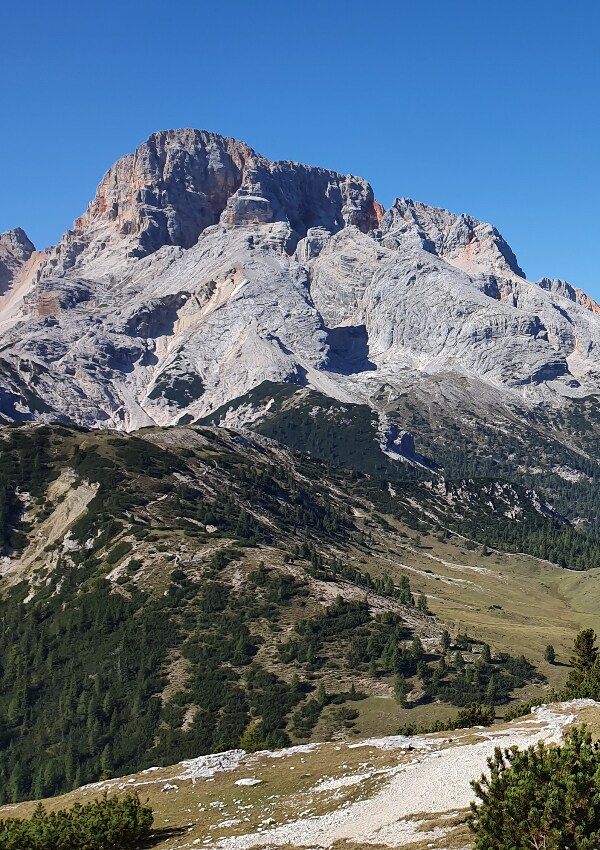
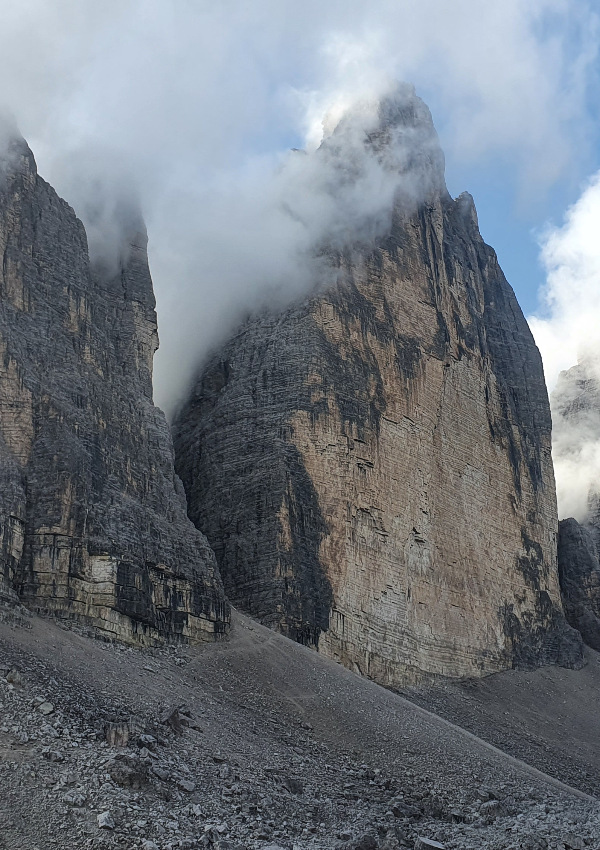
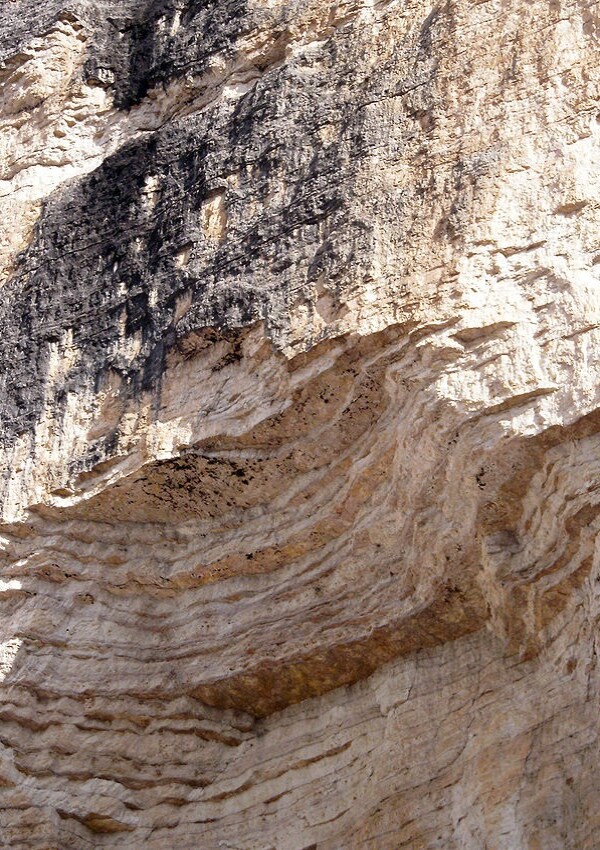
A close look at the rock faces of the Three Peaks reveals clay layers that lie between the even banking of the individual dolomite layers.
This is because the main dolomite was formed about 200 to 220 million years ago in the Triassic by sedimentation in shallow water areas of the primeval sea Tethys. Varying fluctuations in sea level led to alternating periods of flooding and drying out of large areas of land, and at the same time to a steady subsidence of the subsoil. This led to the deposition of the rock in the form of these superimposed layers.
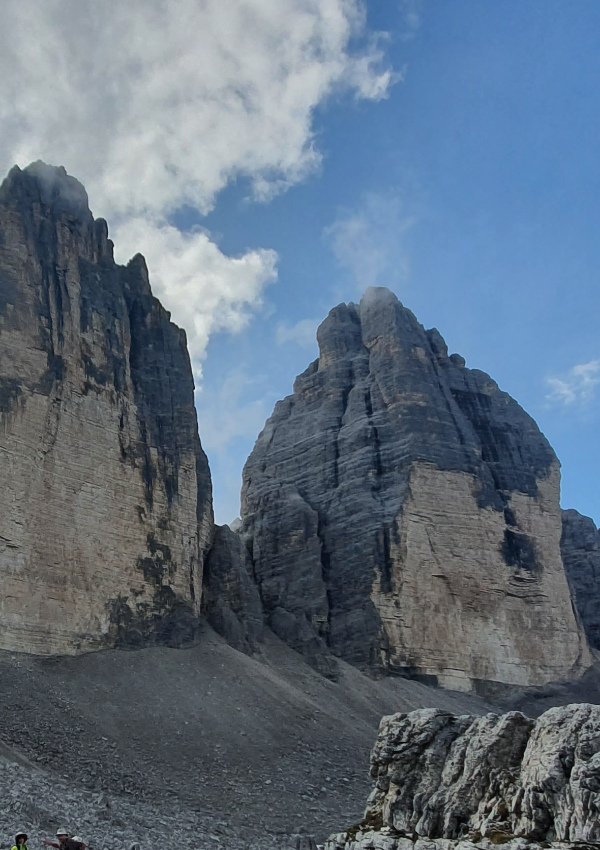
In conjunction with this horizontal banking, vertical fractures led to fractures in rectangular shapes, which can be clearly seen in the often cube-shaped boulders of the extensive rubble heaps at the foot of the steep walls. In 1948, for example, a large rockfall occurred from the south face of the Große Zinne, and in July 1981 a rock bridge between the Allerkleinster Zinne and the Preußturm, which until then had been frequently used by climbers, collapsed.
The extensive pinnacle plateau rests on a base of Schlern dolomite. This is overlaid by moraines from the Würme ice age, but above all by relatively easily weathered rocks of the Raibl strata. Erosion has caused exposed parts of the rock to break away, which is how the steep shapes of the pinnacles and in particular the strongly overhanging rock roofs of the north walls have developed.